




Last Updated:
June 22nd, 2026
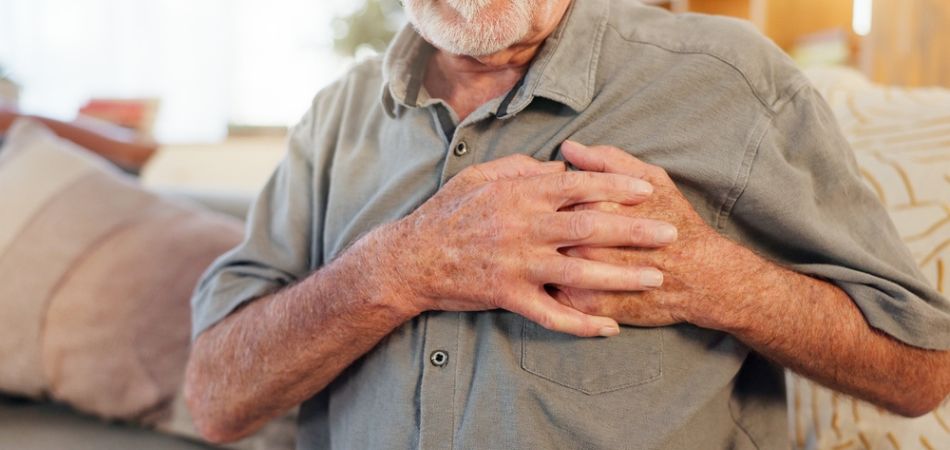
What causes chest pain after drinking?
Chest pain during or after drinking can be frightening, and the anxiety that follows can make the whole experience feel worse than it might actually be. It’s understandable because, as we’re all aware, our mind has a habit of jumping to the worst-case scenario. But chest pain after alcohol has several possible explanations, and most of them are more manageable than you might think.
In this section, we explore some of the most common reasons that we experience chest pains before or after drinking alcohol.
Alcohol also directly irritates the oesophageal lining, which makes the problem worse if you’re drinking regularly.
This is sometimes referred to as Holiday Heart Syndrome, and research has found that binge drinking is the precipitating factor in 35% to 62% of emergency-department atrial fibrillation episodes.
The symptoms can include chest tightness and palpitations, or a feeling that your heart is racing or skipping beats.
Could chest pains during or after drinking be something more serious?
In most cases, chest pain after drinking is linked to reflux or dehydration and resolves on its own. But there are two conditions worth knowing about, because they require medical attention rather than home management. Understanding what they are and how they differ from the other potential causes we’ve discussed is key to identifying when you may need extra help.
The first one is something called Alcoholic cardiomyopathy, and it’s when the heart muscle weakens over time due to sustained heavy drinking. Research indicates that consuming more than 80g of alcohol per day, which is roughly five to six standard drinks, for at least five years increases the risk.
In fact, it accounts for up to 36% of all non-ischaemic dilated cardiomyopathies (NIDCM), which is a serious heart condition. Symptoms can include chest discomfort and breathlessness.
The second serious condition drinking can cause is acute pancreatitis, which is an inflammation of the pancreas that can be triggered by heavy alcohol consumption. The pain typically starts in the upper abdomen but can radiate to the chest, making it feel like a cardiac problem.
Pancreatitis requires medical treatment and should not be managed at home.
When to seek medical attention
Not every instance of chest pain after drinking requires a trip to A&E, but there are warning signs that should never be ignored. The NHS advises calling 999 if you experience chest pain that does not go away, pain that spreads to your arm, neck or jaw, chest pain accompanied by sweating, shortness of breath or a feeling of lightheadedness.
If you’re unsure whether what you’re feeling is serious, it’s always better to get checked than to wait and see.

When chest pain is actually anxiety
This is the cause that rarely gets the attention it deserves. A large number of people who experience chest pain after drinking are not dealing with a heart problem or a digestive issue at all. They’re actually experiencing anxiety-driven chest tightness that can feel almost identical to a cardiac event.
The mechanism behind this is neurochemical, and while you’re drinking, alcohol boosts your brain’s calming systems and suppresses the stimulating ones. Your brain compensates by adjusting its chemistry to account for the alcohol’s presence. When the alcohol clears, those adjustments are still in place, which means your nervous system is left in an overstimulated state. Your heart rate can rise, and a wave of anxiety can settle over you that feels physical rather than psychological.
This is what’s become known as “hangxiety,” for people who are already prone to anxiety; the effect can be even stronger.
This means that two people who drink the exact same amount of alcohol, in theory, could have very different hangover experiences, especially if one of them suffers from pre-existing anxiety.
The problem is that the symptoms of this rebound anxiety, chest tightness, a racing heart and a sense of dread, overlap almost perfectly with the symptoms of a genuine cardiac event.
Research has found that around 25% of patients who present to emergency departments with chest pain meet the criteria for panic disorder. This means that a lot of people are either panicking about something that isn’t cardiac or dismissing something that is because they assume it’s “just anxiety.”
If you’re unsure, the safest approach is always to seek medical advice rather than trying to diagnose it yourself.
What recurring chest pain after drinking is telling you
Chest pain that happens every time you drink or symptoms that are getting worse over time are your body’s way of communicating to you. It could be that your tolerance for alcohol is declining, which can be a sign of liver or cardiovascular strain. It could mean that the cumulative effect of repeated drinking sessions is placing more pressure on your heart and digestive system than they can comfortably handle.
At a certain point, the question stops being “why does my chest hurt after drinking?” and becomes “why am I continuing to drink when my body is clearly reacting badly to it?”
If that second question resonates, it might be worth sitting with a few honest reflections.
- Are you drinking more than you planned to when you start?
- Have you tried cutting back but found it difficult?
- Do you find yourself thinking about your next drink during the day?
- Are you experiencing symptoms like these and continuing to drink despite them?
These questions aren’t a diagnostic tool, and answering yes to any of them doesn’t automatically mean you have a problem with alcohol. But they can open the door to a conversation with someone who understands addiction and can help you figure out what your next step might be.
How Oasis Bradford can help
If you’re concerned about your drinking and it’s starting to affect your health, Oasis Bradford can help. We provide personalised treatment for alcohol addiction, with a supervised detox through to therapy and ongoing aftercare.
Whether you’re ready to take action or you’d prefer to understand your options first, we’re here to have that conversation. Contact Oasis Bradford today for a confidential conversation about your next steps.
(Click here to see works cited)
- Anebo, T., Srikulmontri, T., Byfield, K., Obomanu, E., Wattanachayakul, P., & Davis, M. (2025). Gastroesophageal Reflux Disease ( GERD ) and Risk of Incident Acute Myocardial Infarction: A Systematic Review and Meta‐Analysis of Cohort Studies. JGH Open, 9(10). https://doi.org/10.1002/jgh3.70295
- Brown, K. N., Yelamanchili, V. S., & Goel, A. (2020). Holiday Heart Syndrome. PubMed; StatPearls Publishing. https://www.ncbi.nlm.nih.gov/books/NBK537185/
- Shaaban, A., Gangwani, M. K., Pendela, V. S., & Vindhyal, M. R. (2021). Alcoholic Cardiomyopathy. PubMed; StatPearls Publishing. https://www.ncbi.nlm.nih.gov/books/NBK513322/
- Health Direct Australia. (2018, October 29). Pancreatitis. Www.healthdirect.gov.au. https://www.healthdirect.gov.au/pancreatitis
- NHS . (2017, October). Chest pain. Nhs.uk. https://www.nhs.uk/symptoms/chest-pain/
- Swift, R., & Davidson, D. (2024). Alcohol Hangover: Mechanisms and Mediators. Alcohol Health and Research World, 22(1), 54. https://pmc.ncbi.nlm.nih.gov/articles/PMC6761819/
- Huffman, J. C., & Pollack, M. H. (2003). Predicting Panic Disorder Among Patients With Chest Pain: An Analysis of the Literature. Psychosomatics, 44(3), 222–236. https://doi.org/10.1176/appi.psy.44.3.222

